

Opening of the International Conference on “Family and Technology: Service Control and Controls of Use”
Nouakchott
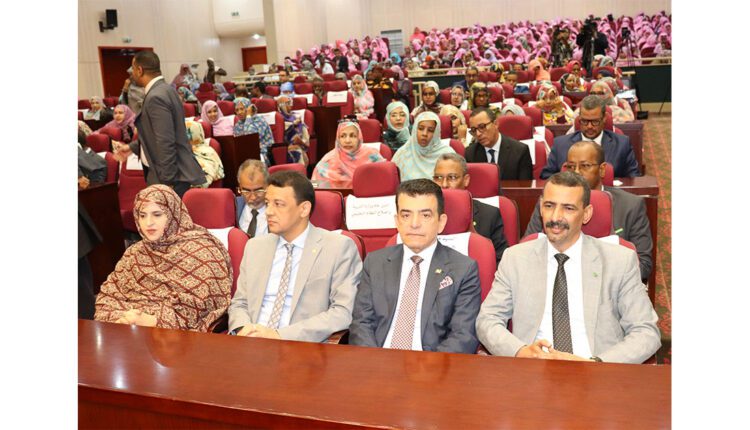
The Islamic World Educational, Scientific and Cultural Organization (ISESCO), under the High Patronage of the First Lady Mariam Fadel Dah, launched, on Thursday in Nouakchott, the work of the third session of the International Conference on Science on the theme “Family and Technology: Service Control and Controls of Use”.
The choice of the title of this course “Family and Technology” comes to open another window related to digitization, and its positive and negative effects on society in all its spectrum.
This conference, the second of its kind in Nouakchott, is organized by the Islamic World Educational, Scientific and Cultural Organization (ISESCO) and the Federation of the Universities of the Islamic World, in cooperation with the Ministry of Digital Transformation, Innovation and Modernization of Administration, and the National Commission for Education, Culture and Prosperity.
In a speech delivered on behalf of the First Lady, the Minister of Social Work, Childhood and Family, Mrs. Savia bint N’hatah, explained that the family and its maintenance occupy a prominent place within the societal program of His Excellency the President of the Republic, Mr. Mohamed Ould Cheikh El Ghazouani (My Ambition for the Homeland), noting that His Excellency pledged to build a harmonious society dominated by the values of national solidarity and social inclusion, and to work to make the most of technology and the advantages it provides, not the least of which is to facilitate people’s lives and ensure their access to basic services in an easy manner.
She explained that the Mauritanian family, which is new to the use of these technologies and still suffers from outdated mentalities and behaviors, is more exposed to the negative effects of the wrong uses of these technologies and less benefits from the advantages offered by them.
For his part, the Minister of Culture, Arts, Communication and Relations with Parliament, Government Spokesman, Mr. El Houssein Ould Medou, explained that this conference represents an appropriate opportunity for deliberation between various partners, including social knowledge experts, specialists in digital culture, families and various authorities, in order to reach views and proposals that contribute to meeting the challenges facing our Islamic world, through deliberations guided by the Islamic approach and value pedagogy.
He added that these deliberations will present a vision of a model with two integrated dimensions, after Islamic countries bet on it in developing their plans to confront this internal invasion that threatens the entity of the nation, and another dimension that removed the ability of minds in Islamic societies to serve humanity through prudent treatments of what has become the most important concern of decision-makers in the world.
For his part, the Minister of Digital Transformation and Modernization of Administration, Mr. Ahmed Salem Ould Bede, explained that this conference is a valuable opportunity for joint reflection and exchange of experiences on best practices to organize digital services and guide their uses within the family.
Technology offered enormous opportunities to improve the quality of life by facilitating access to services and promoting education and health, and also posed challenges related to inappropriate uses, which could affect family values and cohesion.
He pointed out that ISESCO is aware that the trend towards women’s occupation of an important place in academic activity is a tool for their effective participation in social life, and to benefit from their vision on the various challenges facing societies.
The Director-General of the Islamic World Educational, Scientific and Cultural Organization (ISESCO), Secretary-General of the Federation of the Universities of the Islamic World, Dr. Salem bin Mohammed Al-Malik, explained that this second session, organized in Nouakchott, came to enhance joint work to exchange visions on a delicate topic in the path of empowering women and girls in the digital field, noting that this poses a challenge in order to benefit from their distinguished energies and encourage them to enter the current scientific professions and participate in their formulation.
He added that this third session in this sober knowledge decade comes to open another window related to digitization and its positive and negative effects on society in various spectrums.