

Minister of Social Action participates in the 44th Session of the Council of Arab Ministers of Social Affairs
Manama
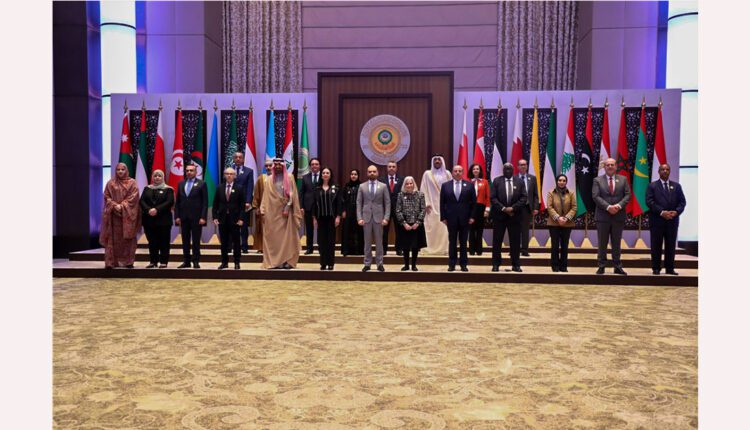
The Minister of Social Action, Childhood and Family, Savia Ntahah, participated on Wednesday in the opening of the 44th session of the Council of Arab Ministers of Social Affairs, which is being hosted by Manama, the capital of the Kingdom of Bahrain.
In a speech on the occasion, the Minister expressed her thanks to the Kingdom of Bahrain for the warm reception, hospitality and good organization.
She also praised the great efforts made by the Social Affairs Sector of the Technical Secretariat of the Council of Arab Ministers of Social Affairs, which enabled the regularity of the Council’s sessions.
The Minister reviewed the status of social work in our country, which the government considers a priority within the social program of His Excellency the President of the Republic, Mr. Mohamed Ould Cheikh El Ghazouani.
She said that the general policies of the government in Mauritania are generally social policies, both in terms of their focus on supporting and empowering vulnerable and underprivileged groups, as well as in terms of adopting the values of social solidarity, consolidating the values of citizenship and national unity, and rejecting all behaviors and stereotypes that feed division and illusory hierarchies.
She added that one third of the country’s population benefits from cash transfers to support purchasing power, and the government is keen to subsidize some basic commodities to make them accessible to vulnerable groups, and provides treatment for patients with chronic diseases with limited income, including cancer patients who benefit from almost comprehensive care and kidney failure patients. These last, the Minister said, benefit from a guaranteed comprehensive treatment including medicines as well as indigent patients who undergo open heart surgery or catheterization, adding that indigent patients whose medical authorities decide they need to be transferred abroad benefit from a comprehensive care including transportation expenses.
The Minister continued: “Persons with disabilities in Mauritania, whose number is estimated by the latest official statistics at 10% of the total population, benefit from support, rehabilitation and integration into active life, including political life, as the law requires that seats be allocated to them in Parliament. The Mauritanian state also allocates a public institution concerned with providing free specialized education for children with disabilities, especially children with autism, mental disabilities, the deaf and the blind, and providing specialized training in line with the forms of disability.”
The Minister explained that as part of its efforts in the field of social action, the Mauritanian state is keen to empower women economically, politically and socially, and provides appropriate vocational training for girls who dropped out of school and works to ensure that all children of pre-school age have access to this form of education in accordance with the program of His Excellency the President of the Republic to create republican education to narrow the gaps between the various groups of society.
The Minster mentioned that the Mauritanian family benefits from a number of interventions of a social nature. In addition to providing social reconciliation services and addressing family conflicts, women breadwinnes of households benefit from development programs to establish their own income-generating projects or to support existing ones.
The Minister pointed out that productive families are at the forefront of the sector’s concerns and works to promote their production, especially a production in which all family members contribute.
It is worth mentioning that at the beginning of the session, the Kingdom of Bahrain received the presidency of the 44th session of the Council of Arab Ministers of Social Affairs from the Arab Republic of Egypt, chair of the 43rd session, and after the opening session, the working sessions began, where the draft agenda and a number of draft resolutions were adopted.
In addition to the Minister, the Technical Advisor in charge of Communication and the Director of Family, Women and Gender attended the opening of the session.