

Tiguint: President of Republic Inaugurates 204-Km High Voltage Electric Line
Nouakchott
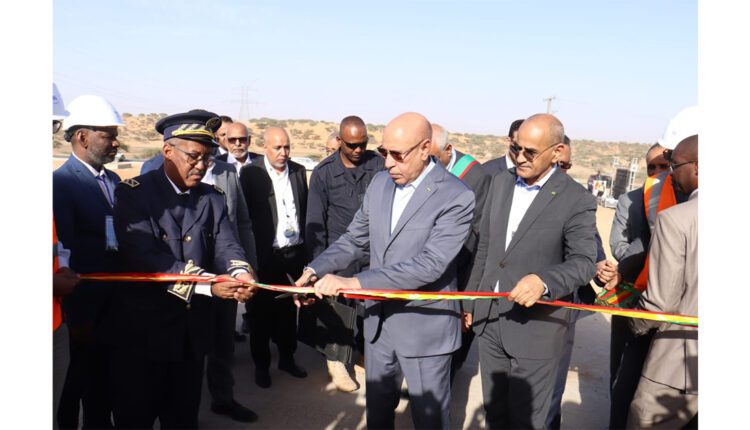
On 22 December, His Excellency Mr. Mohamed Ould Cheikh El Ghazouani, the President of the Republic, inaugurated a 225 kV high voltage power line, 204 km long.
As part of this project, 518 two-circuit metal pylons were constructed, a 630 mm electrical transmission network with a length of 1224 km, and a 408 km protection wire with 24 pairs of optical fibers were constructed. A set of composite insulators was installed.
This high voltage line allowed the extension of the Nouakchott station by the addition of two circuits of the 225 kV line, the construction of a new station with 5 high voltage circuits ranging from 90 to 225 kV, 4 33 kV, a 33/90/225 transformer, with a capacity of 10 MVA, and a digital monitoring and control system with a communication system.
As part of this high voltage line, a new power plant was built in Bani Naaji with 9 high voltage circuits of 225 kV, two transformers with a single capacity of 20 MVA, and the extension of the old power plant of Bani Naaji by the addition of two 90 kV line circuits.
The line will also ensure the electrical interconnection between our country and the Republic of Senegal from the Nouakchott power plant, passing through the aforementioned transformation stations.
The objective of this high voltage line is to develop energy exchanges between Mauritania and Senegal and the Mauritanian electricity transmission network, supply electricity to the pumping equipment supplying the city of Nouakchott with drinking water, ensure a bilateral connection to the electricity system of the Senegal River Investment Organization, and improve access to electricity in the geographical area of the line.
The project cost 17.4 billion ouguiyas, financed by the Arab Fund for Economic and Social Development, and executed in 18 months.
On site, the President of the Republic followed explanations on the route of the line, the qualitative enrichment that it will bring to the national electricity network, and its expected role in improving the connection of the different cities of the country from this network, as well as the electrical capacity it will provide and the extent of its contribution to the population’s access to electrical services.