

Mauritania Participates in 52nd OIC Council of Foreign Ministers Session in Baghdad
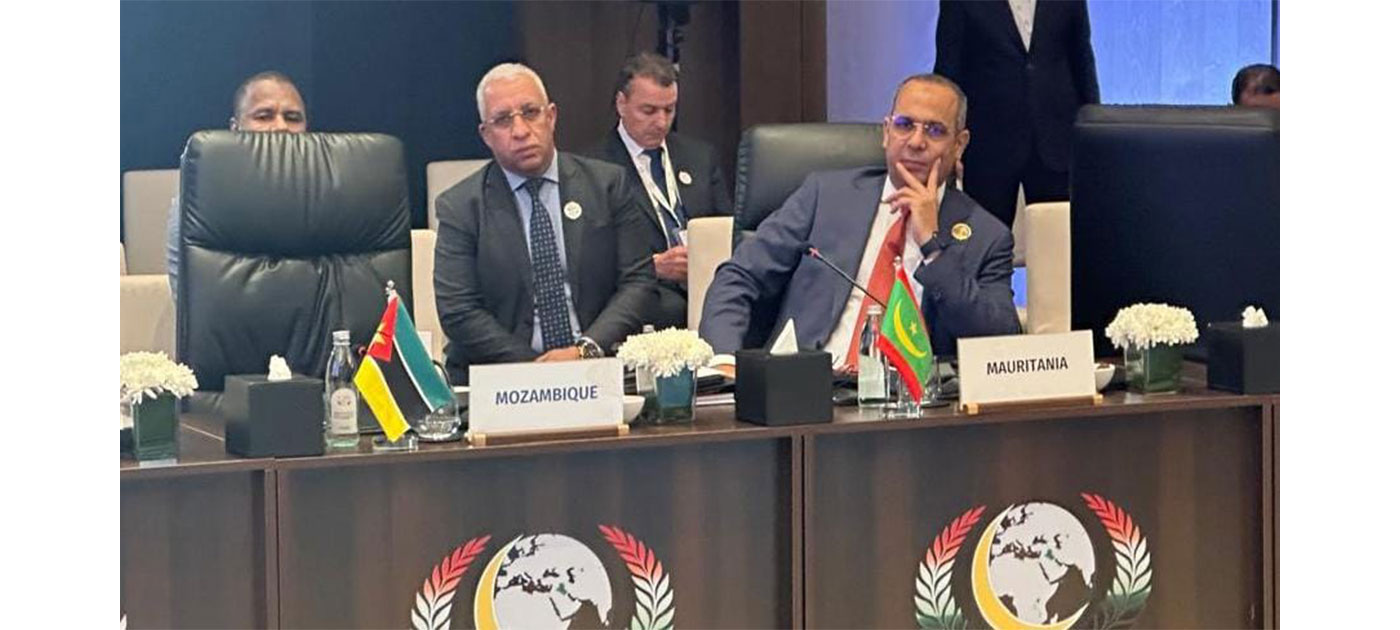
The proceedings of the 52nd session of the Council of Foreign Ministers of the Organisation of Islamic Cooperation (OIC) began this Saturday in the Iraqi capital, Baghdad, with the participation of a high-level delegation from Mauritania, led by Ambassador Damane Hamar, Secretary-General of the Ministry of Foreign Affairs, African Cooperation, and Mauritanians Abroad.
The session is being held under the theme “Dialogue and Solidarity: Two Fundamental Pillars for Strengthening Peace and Sustainable Development,” amid regional and international challenges that require stronger consultation and coordination among member states.
The Palestinian question tops the agenda, alongside issues concerning Yemen, Jammu and Kashmir, Afghanistan, Sudan, and Syria, as well as terrorism, extremism, Islamophobia, and the situation of Muslim communities.
The session is also discussing draft resolutions on education and scientific research, economic development, the fight against poverty and unemployment, and the promotion of sustainable development.
In his address at the opening session, Ambassador Damane Hamar, Secretary-General of the Ministry of Foreign Affairs, African Cooperation, and Mauritanians Abroad, reaffirmed Mauritania’s commitment to the right of the Palestinian people to establish an independent and sovereign state within the borders of June 4, 1967, with East Jerusalem as its capital, in accordance with international legitimacy resolutions and the Arab Peace Initiative.
He condemned Israel’s continued violations in the Gaza Strip and the West Bank, including settlement expansion, forced displacement, and annexation plans. He called for an end to these practices, respect for international law, implementation of the second phase of the ceasefire agreement, and the guaranteed delivery of humanitarian aid and reconstruction assistance to Gaza. He also called on countries that have not yet recognized the State of Palestine to do so in support of the two-state solution, an end to the occupation, and the establishment of a just and lasting peace.
At the regional level, he condemned the attacks targeting the Kingdom of Saudi Arabia, affirming Mauritania’s full solidarity with the Kingdom and its support for all legitimate measures it takes to protect its security and safeguard its sovereignty and territorial integrity. He also called for dialogue and a political solution in Yemen that would preserve the country’s unity, sovereignty, and independence.
On economic and development issues, the Secretary-General emphasized the importance of strengthening cooperation among OIC member states and developing partnerships in agriculture, intra-OIC trade, tourism, employment, and investment in technology, innovation, and smart driving, with the aim of supporting sustainable development and creating job opportunities.
He renewed Mauritania’s call for increased contributions from brotherly countries to the OIC Fund for Supporting and Employing Youth in the Sahel region and the Lake Chad Basin. He noted that work was underway, in cooperation with the Organisation’s General Secretariat, to convene the Fund’s inaugural general assembly in Nouakchott, paving the way for the launch of its activities.
He affirmed that addressing security challenges in the Sahel region required a comprehensive approach combining the fight against terrorism and extremism with efforts to tackle their economic and social root causes, while empowering young people and expanding their opportunities to participate in development.
He also highlighted the importance of promoting the values of moderation and a balanced approach, combating Islamophobia, hate speech, and discrimination, and fostering dialogue and coexistence among peoples and cultures. He called for the development of the OIC’s operational mechanisms and the strengthening of its institutional effectiveness and resources.
At the conclusion of his address, he reiterated Mauritania’s commitment to the principles and objectives of the Organization and its readiness to continue working with member states to support just causes, strengthen Islamic solidarity, and consolidate security, stability, and development.