

Minister of Culture: Mauritania is monitoring developments in its regional environment and adheres to the principle of positive neutrality
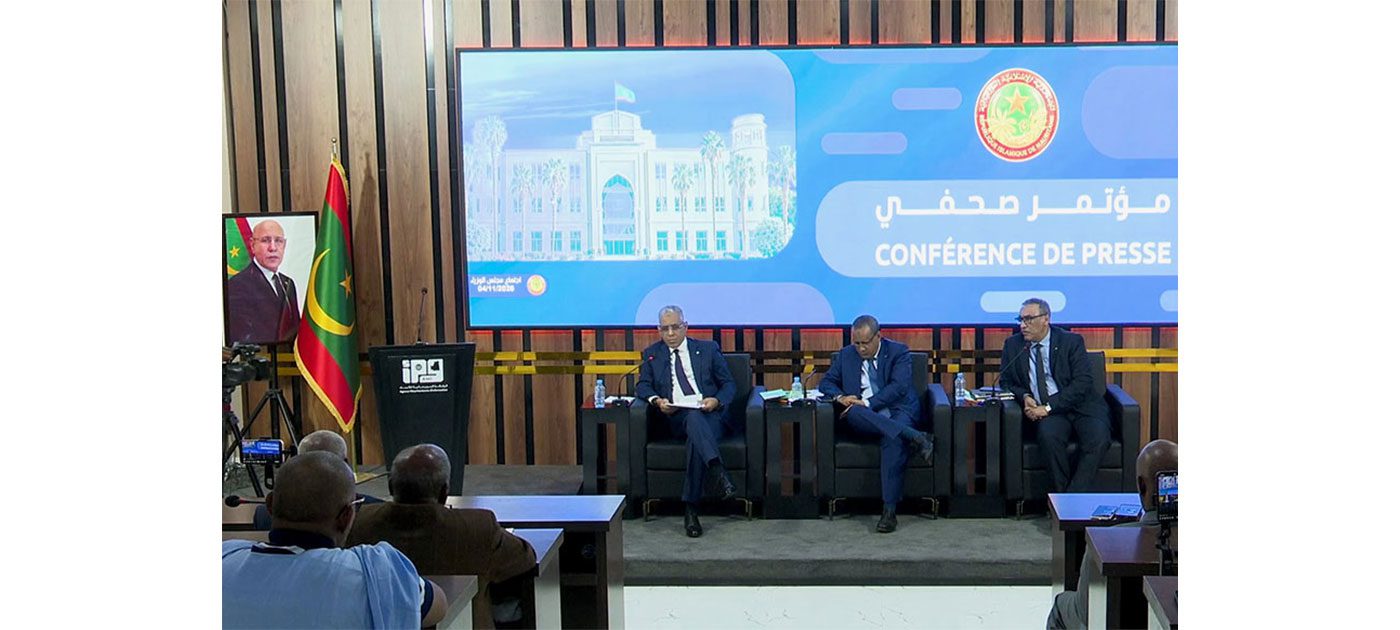
The Minister for Culture, Arts, Communication and Relations with Parliament, and Government Spokesperson, Mr Mohamed Ould Bebana, affirmed that Mauritania is closely monitoring developments in its regional environment, emphasising its adherence to the principle of positive neutrality and considering itself part of the solution, not part of the problem.
This came in response to a question on the subject whilst commenting on the outcome of the Cabinet meeting on Wednesday evening at the Mauritanian News Agency, alongside the Minister for Economic Affairs and Development and the Minister for Higher Education and Scientific Research.
For his part, the Minister of Economic Affairs and Development, Mr. Mohamedou Ahmedou Mhaimid, outlined the key aspects of the new reform of the public procurement system, emphasising that the draft decree relating to the implementation of Law No. 026-2026, which contains the Public Procurement Code, represents a fundamental step towards modernising the public procurement system, enhancing its efficiency, rationalising public expenditure, and consolidating transparency and good governance.
With regard to institutional aspects, the Minister explained that the draft decree involves the restructuring of the Public Procurement Regulatory Authority, which has been renamed the ‘Public Procurement Regulatory Authority’, whilst expanding its remit and strengthening its powers.
He noted that this reform includes the development of the oversight system by strengthening the powers of the Public Procurement Oversight Committee, now known as the “National Committee for the Oversight of Public Procurement”, thereby enabling it to play a more effective role in monitoring procurement procedures and ensuring their integrity and transparency.
With regard to enhancing transparency and combating corruption, the Minister explained that the new reform includes measures aimed at consolidating the principles of good governance, including the obligation for officials to declare their assets and interests, alongside the gradual digitisation of various procedures relating to the award of public contracts, as well as a series of measures designed to reduce the timeframes for the various stages of contract award and implementation, thereby accelerating the completion of development projects and enhancing the benefits citizens derive from them.
With regard to supporting the national economy, the Minister emphasised that the draft decree reinforces the principle of national preference by allocating a quota to eligible national institutions when they compete with foreign institutions. This supports the capabilities of local companies, strengthens their presence in the implementation of public projects, and contributes to expanding the national private sector’s contribution to economic activity.
For his part, the Minister of Higher Education and Scientific Research, Mr Yaqoub Ould Meine, confirmed that the draft decree concerning the establishment of the regulations governing the grades of teaching staff and researchers in higher education, which he presented to the Council of Ministers, aims to harmonise the legal provisions governing these grades.
He explained that the draft decree implements the provisions of Article 31 of Law No. 93-09, enacted on 18 January 1993, which sets out the general regulations governing civil servants and contract staff of the State, noting that it aims to establish a coherent regulatory framework suited to the specific nature of higher education.