

President of Republic Announces Pay Raises for State Officials
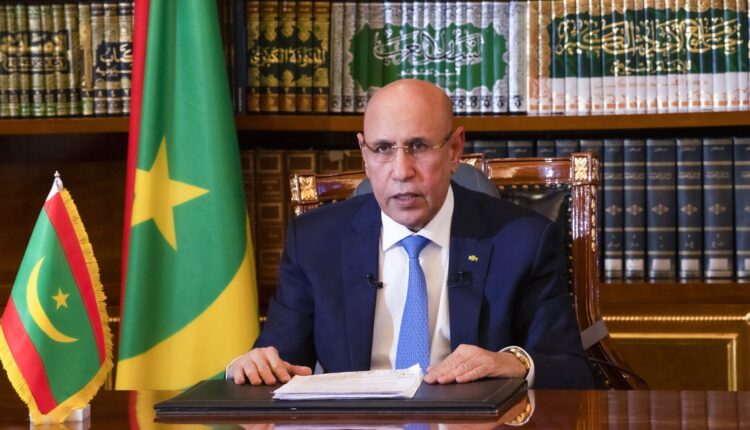
In his address to the Nation on the eve of the 62nd anniversary of National Independence, the President of the Republic announced an increase in salaries, family allowances, and the minimum wage and the payment of an incentive bonus to primary and secondary school teachers and supervisors.
Before the announcement of these measures, which will take effect from 1 January 2023, the President of the Republic took stock of the achievements of the last three years.
Ending on an optimistic note, the President of the Republic said: “I assure you, my dear fellow citizens, that by the grace of Allah, we will be able to overcome all the current international crises with a firmer will and greater determination to continue the national construction to which we all aspire, in a State of security, freedom, development, in a nation of honor, fraternity, and justice. »
Here is a full translation of the speech:
“My dear fellow citizens,
It’s a great pleasure and honor to extend to you, wherever you are, my warm congratulations on the occasion of the 62nd anniversary of the glorious National Independence Day, day of dignity, pride, and honor.
The event of which we are celebrating the anniversary tomorrow, the proclamation of the advent of the Islamic Republic of Mauritania, constitutes, at the same time, the crowning of a radiant process of resistance, armed struggle, intellectual combat, and foundation of a new course of construction of the modern Mauritanian state.
Deserved tribute therefore to the heroes of our intellectual resistance, whose pens have not failed, and to our armed resistance, whose will has not weakened in their momentum of sacrifice at the cost of their lives, for the defense of honor and of the dignity of the homeland and for the triumph of freedom and the defense of sovereignty.
One of the most perfect manifestations of belonging to the nation and of the sacrifice for it is illustrated through the action made and that continues to be made by our armed and security forces at the cost of immense efforts so that we all enjoy security, stability, and tranquility. It is, therefore, the best opportunity for me to address to all of them, officers, non-commissioned officers, soldiers and agents, the expression of consideration and deep gratitude. I also want to extend the same gratitude to all the generations who have succeeded in founding and building the modern Mauritanian state.
Dear fellow citizens,
The entrenchment and preservation of the sovereignty of States and peoples remain dependent on the level of consolidation of national unity. Because it is national unity which is the foundation of stability and development and the protective shield in the face of all challenges. Therefore, we have made its reinforcement a central objective in all our public policies.
Because of the correlation between a fair and equitable distribution of resources, and on the other hand, on the one hand, the consolidation of national unity and social cohesion, and the impetus for global development, on the other, we have, at the very beginning, focused on the fight against exclusion, marginalization, poverty, and precariousness.
In this context, we have made great efforts and achieved many important results, including:
• Health insurance for 100,000 families at a cost of nearly MRO 2,100,000,000 per year.
• A program to fight child malnutrition for the benefit of 30,000 children at a cost of nearly MRO 600,000,000.
• The launch of financing for 3,881 income-generating activities and hundreds of flexible loans for financial coverage of MRO 2,300,000,000.
• The launch of construction works for 1,932 social housing units.
• The increase in the number of families benefiting from cash transfers from 30,000 to 98,236.
• Assistance provided to 65,000 families affected by the lack of food security at a cost of MRO 6,747,000,000.
• Free access to some health services for all citizens throughout the national territory, such as free hospitalization, resuscitation drugs, emergencies, medical transport between health units, transport for road accident victims, the obstetric package, and treatment costs for dialysis patients.
• The supply of regularly subsidized basic food products that currently benefits 131,550 families.
• Relief provided to 19,440 families affected by bad weather through the free supply of food and shelter.
• The distribution of 30,000 tons of fish at subsidized prices between 2020 and 2022.
• The support provided to stockbreeders to strengthen their resilience to the drought of the current year through the implementation of a program which provided 71,570 tons of cattle feed at a subsidized price.
• Assistance provided by the Department of Social Action to 9,240 indigent patients to cover treatment costs at a cost of MRO 1,780,000,000 old.
Added to this are the many costly interventions to deal with precariousness, poverty, and marginalization and to consolidate national unity.
Alongside the network of social safety nets that we have woven and made denser day after day, all these measures, and others of the same order, we have worked tirelessly to establish good governance within the framework of a strong rule of law endowed with an effective administration close to the citizen, guaranteeing them all their rights, on the exclusive basis of citizenship, as we believe it is the most solid pillar of development, stability, strengthening of national unity, and consolidating social cohesion.
It is true that this work has not fully reached its goal and cannot achieve it in two or three years, but it is equally true that we have made considerable progress on this path. We have entrenched the principle of the separation of powers and worked to modernize the judicial system and strengthen its independence, improve the working conditions of magistrates, rectify their legal situations, and review the course of their professional careers. We have also offered training and improvement of expertise to hundreds of people who work in this sector. In the same way, we have introduced and generalized legal assistance through the opening of offices for this purpose in all the wilayas of the country.
Likewise, we have fought against negative social stereotypes and consolidated individual and collective freedoms by taking the necessary measures to preserve people’s dignity.
In the same vein, we have embarked on a global fight against mismanagement and all forms of squandering of public funds, improved systems related to accounting risks, revised the legislative framework organizing the Court of Accounts and attached the General State Inspectorate to the Presidency of the Republic. We have also allocated the necessary human and financial resources to this court and intensified the action of control and inspection institutions.
All these actions, which were carried out in our firm determination to modernize the administration and bring it closer to the citizen, have today earned us a synergy of all the ministerial departments and public services for the implementation of the tools and organizational arrangements capable of helping citizens quickly in their procedures and providing them, where appropriate, with the necessary advice and information.
At a time when the State was facing serious dangers which weighed on national unity and weakened social cohesion, in a context where only the culture of openness, dialogue, and acceptance of difference can prevail, we have been eager, since we came to power, to appease the political and social climate by opening up to all the parties.
We have also adopted consultation as a constant mode in the approach to managing public affairs. There is no better proof of this than the last consultation between the government and the political parties, which was crowned by the consensual management of the next elections, to anchor trust and mutual respect and promote the general interest in the face of sectarian and short-sighted approaches.
Driven by our sincere desire to involve all parties in public affairs, we have insisted on openness and dialogue. To do this, we have worked to strengthen decentralization, increase the level of proportionality to broaden the base of representativeness, create a list guaranteeing the representation of youth and disabled people, and allow communities residing abroad to recover their constitutional right by electing themselves, among their members, their representative in Parliament. Added to this are all the measures taken to strengthen the presence of young people and women in the spheres of decision-making and management of public affairs.
To strengthen the involvement of all parties in public affairs and in the country’s development in general, we have set ourselves the central objective of building an inclusive and high-quality education system. Because it is education that instills in the minds of children the values of citizenship, social responsibility, and the importance of national unity and prepares them for effective and smooth integration into social and professional life.
It is also the best path leading to social advancement and the fight against poverty and precariousness. This is why, this year, we have launched the Republican School project, which will strive to offer all children in the country, under the same conditions, a high-quality education. This required us to meet many challenges in terms of school infrastructure and educational materials, to fill the gap in teaching staff and to improve their know-how and working conditions.
In this context, the High Council for Education was created, the education orientation law was approved, and the first year of basic education was limited to public schools.
Also, from 2019 up to now, the following actions have been carried out:
• Recruitment of 8,000 basic schoolteachers, secondary school teachers, and inspectors.
• Launch of an ambitious program to modernize and extend the infrastructure and which has so far enabled the construction of 1,625 classrooms, while 1,500 new classrooms will be delivered before the opening of the next school year.
• Launch of a vast program of school canteens for 190,000 students in 1,200 schools spread over all the wilayas.
• Acquisition of 85,000 table-benches of which 24,800 have been received so far; the Department continues to receive the remaining quantity;
• Acquisition of nearly 3,200,000 schoolbooks.
• A support fund for the Republican School was also created to build, rehabilitate, and equip school infrastructure. This year, it will be endowed with MRO 20 billion from the state budget.
• All these efforts have been accompanied by numerous incentive measures for teachers such as the increase in the remoteness bonus by 150%, the payment of the chalk bonus over 12 months instead of 9 months and its extension to include school principals, in addition to other measures in the same direction.
• During this time, efforts have intensified at the level of employment and vocational training through:
• The implementation of numerous integration programs to support self-employment for the benefit of 7,000 people, 30% of whom are women, for an amount of MRO 6 billion;
• The employment of 6,000 others as part of the third edition of “My project my future”.
• Within the framework of promoting the employability of young people between the ages of 15 and 24 who are outside the education system in the three wilayas of Nouakchott, the two Hodhs, Assaba, Trarza, and Guidimakha, 14,750 young people, 50% of whom are women, have been trained in the various trades.
• In the same framework, 2,588 young people were perfected.
• Added to this is the creation of 1,400 small businesses which are now helping to create national wealth, in addition to 6,000 new small businesses planned for the end of 2022. Three vocational training schools have been created while the School of Buildings and Public Works in Riyadh and 3 skills development centers have been built, not to mention other similar measures.
• In parallel with this effort made in terms of training and employment, we have endeavored to improve the institutional framework for higher education and develop a strategy for 2030. We have consistently supported infrastructure, and an announcement will be made soon about the launch of construction work for a new extension of all the faculties of the University of Nouakchott over an area of 32,000 square meters and the increase in the university’s reception capacity from 14,000 to 25,000 students at an overall cost of MRO 9 billion.
Similarly, the construction of the new building of the National School of Administration, Journalism, and Magistracy will be carried out at a cost of MRO 2 billion at a time when work is continuing for the construction of three higher institutes, the Higher Institute of Statistical Professions, the Higher Institute of Energy Professions, and the Higher Institute of Computer Professions, as well as the construction of the Higher School of Business Studies.
Also, three university centers were created and two dormitories for boys and girls respectively with a capacity of 2,560 beds and 1,440 beds in addition to the dormitories at the Translation Institute of Nouadhibou with 176 beds and at the Islamic University of Aioun with 540 beds in addition to the doubling of the reception capacity of the Higher Institute of Islamic Studies and the consequent increase in the salaries of professors, researchers, and scholarships.
Despite what has been mentioned in terms of strengthening national unity and social cohesion, our holy religion remains the solid foundation of our unity and the cohesion of our society and the factor of the preservation of our rich cultural diversity through communion in the unifying faith. Therefore, we have endeavored to promote everything that is likely to further anchor the values and principles of the Islamic religion.
In this context, we have recruited 400 mosque imams and 400 muezzins who today receive their salaries and benefit from health insurance at a time when 326 pilot mahadras have been approved and their principals have been granted salaries, bringing , as of 2019, the total number of mahadras receiving monthly allowances at 1115.
At the same time, a prize for recitation of the Holy Quran and mastery of the precepts of fiqh was instituted as well as the launch in Akjoujt of the great Chinguit Mahdara and the creation of the House of the Holy Quran run by illustrious Ulemas and great readers working on the printing and editing of the Mauritanian Mashaf and the revision of editions published abroad.
The place of religious instruction has been strengthened in education in addition to many other measures of the same order. The contribution of all these actions to the anchoring of the values and principles of our holy religion contributes to the strengthening of our national unity and the consolidation of our social cohesion.
We wanted to preserve this national unity and this social cohesion by ensuring security, stability, and tranquility throughout the national territory despite the profound upheavals in the regional and international environment.
This has been made possible thanks to the continuous strengthening of the professional and operational capacities of our land, naval, and air armed and security forces, the acquisition for their benefit of equipment and the recruitment of new elements, the training of human resources, and the improvement of their living conditions.
This momentum has been reinforced by an active foreign policy with a strong presence on the regional and international scenes concerned with protecting the interests of the State abroad, and faithful to the principles of good neighborliness, relations of friendship and cooperation, and defense of just causes, particularly the issue of occupied Palestine.
Dear fellow citizens, You will not miss the context in which the world lives today in terms of exceptional conditions marked by the harmful consequences of climate change, the destructive effects of violence and extremism, the catastrophic consequences of the COVID-19 pandemic, and the repercussions of the Ukrainian crisis on supply chains as well as the acute food crisis and the dizzying rise in energy and food prices, heralding a global economic recession.
These concomitant crises have hit world economies hard, and more particularly those of developing countries, just as they have weakened the resilience of economic and social systems.
Despite this situation, we have managed to achieve a growth rate of 5.3% in 2022, by the will of Allah and thanks to the pursuit of our monetary policy which strengthens the dynamism of our economy, the rational management of the foreign exchange and reserves, and our efficient treatment of debt service, the level of which was previously very high, was rendering our economy exhausted and virtually paralyzing our ability to access foreign financing.
The achievement of these results proceeds from the launch, as soon as the COVID-19 crisis has receded, of an economic recovery program to correct the structural dysfunctions resulting from this crisis and their effects on our economic system, to promote the productive sectors, achieve as much as possible in terms of food self-sufficiency, improve infrastructure, and ensure universal access to basic services in the areas of electricity, water, and health.
To develop our productive sectors and achieve food self-sufficiency, the following actions have been carried out:
o The development of 100 Ha of small market gardening areas to empower 2,749 women in Trarza, Brakna, and Gorgol;
o The development of the Chicha irrigated perimeter over an area of 374 Ha for the benefit of 750 needy families.
o The rehabilitation of the perimeter of M’pourrie over an area of 3050 Ha for the benefit of 120 village cooperatives and 185 graduates.
o The development of 3,500 Ha of irrigated perimeters in the plain of R’kiz; they should be delivered during the first half of next year.
The Wadane dam has made it possible to store tens of millions of cubic meters of rainwater and, therefore, guaranteed the replenishment of groundwater levels in areas that faced a structural water deficit.
The storage of this water has made it possible to create 44 recent oases over a total area of 832 Ha.
As part of surface water management and the development of agriculture in rainfed areas, 23 dams were built in 6 wilayas, in addition to the construction of 800 land bunds in several wilayas. Work is underway for the construction of 3 dams in rural areas.
Support was also provided to farmers through several interventions, including the distribution of quality seeds, crop protection, timely supply of fertilizers in the irrigated areas of the country, and which made it possible to cover the national needs in vegetables for several months.
We have also worked to develop our animal wealth, launched a new vision for this sector and have dedicated an independent ministerial department to it with the aim of developing animal wealth and exploiting the diverse and renewable potential it offers. In this context, the following actions have been taken:
– A sharp increase in the budget allocated to veterinary health;
– Creation of a fund to promote the development of animal wealth for an amount of MRO 8 billion;
– Creation of numerous integrated perimeters for the improvement of species and milk production;
– Development of pastoral development plans in the wilayas of Brakna, Trarza, Gorgol, and Guidimakha.
– Creation of the Mauritanian Society of Animal Products and launch of a census of animal wealth as the beginning of the creation of a reliable computer system.
With the aim of promoting our fisheries wealth and strengthening its sustainability and optimal exploitation, the quantities landed have been enhanced and their added value increased by directing investments toward the processing industries necessary to achieve processing geared toward human consumption. Within this framework, two fish canning factories and 37 fish processing factories have been established and the number of fishmeal factories has been reduced.
Also, the sector’s contribution to job creation has been strengthened. Indeed, the commissioning of the Port of Tanit, for example, created 5,200 job opportunities in 2022, an increase of 16% compared to 2021. Support was provided for scientific research and maritime surveillance as well as the small-scale fishing with the construction of 143 boats, the creation of the National Bureau of Fishing Ports to guarantee the management and promotion of all port infrastructures. Added to this is the creation of the Mauritanian Agency for Maritime Affairs with the aim of guaranteeing the accomplishment of the missions entrusted to the maritime administration.
To develop inland fisheries and fish farming, work is underway for the construction of fish farming centers in Nema, Kankossa, and Male and the acquisition of equipment for these centers, in addition to the construction of fish hatching ponds in Mahmouda and Voum Legleita as a pilot experience that will be generalized nationally. The Inland Fisheries and Fish Farming Development Agency was recently established and was tasked with ensuring the development of all water basins for inland fisheries.
The steps taken to develop these productive sectors have been accompanied by a major effort to provide inclusive and quality essential public services. In this context, efforts have been made at the level of electricity infrastructure to strengthen and develop the national electricity system to generalize access to electricity services and support the development process in the country in the best conditions through the supply of competitive, high-quality energy.
259 towns and villages in the country have actually benefited from these efforts. At the end of December of the current year, the medium voltage network project will be created on the Kaedi – Lexeiba – M’bouth – Selibaby – Baidiam – Diaguili – Gouraye – Maghama – Kaédi line. The area of Aftout Charghi known as the “Triangle of Hope” has been electrified, and the urgent component of the project to strengthen electrical infrastructure in interior cities has been executed; project which aims to strengthen electrical installations in 50 cities in the interior of the country by providing them with high-quality equipment and sufficient capacity to guarantee the sustainability of the service.
New networks of 3,000 km will be launched soon in the wilayas of Trarza, Brakna, Gorgol, and Guidimakha, in addition to the construction of hybrid power plants and medium voltage lines. The project for the electrification of areas with agro-pastoral potential in the regions of the two Hodhs and Assaba will start by the construction of hybrid power plants and isolated distribution networks for the benefit of villages with a population of 500 people.
This effort in terms of electrical energy was accompanied by a similar effort in terms of mines and hydrocarbons. Thus, SNIM was able to increase its production to 13,000,000 tons, and the first stone of the F’derick mine will soon be laid, which will add two million tons per year. Gas production from the Grand Turtle Ahmeyim field will effectively begin at the end of next year.
We have also made considerable efforts to ensure comprehensive and integrated management of water resources. Over the past three years, 663 villages have been supplied with drinking water and 5,000 cubic meters per day have been supplied to Boghe by installing a water treatment plant. The water networks have been reinforced in Atar, Kaedi, Tidjikja, and Tichit.
In addition, drinking water production in Nouakchott has been increased with 20,000 cubic meters per day from the Idini aquifer, at a cost of MRO 9,000,000,000, in addition to the construction of 193 tube wells and 70 hydraulic networks. Work is underway to build 25 hydraulic basins.
Added to this is the work in progress to multiply by 3 the production in the pumping station in Voum Legleita by increasing it from 5,000 to 15,000 cubic meters per day, with the connection of 57 new villages.
Work is also underway, within the framework of a structural project to reinforce the installations for supplying the town of Nouadhibou with drinking water from Boulenouar, the project for supplying the town of Kiffa with water from the River, the project to rehabilitate the Aftout Sahili facilities which will produce a quantity of 35,000 cubic meters, and the project to increase Nouakchott’s supply by 200,000 m3 per day from the well field of ‘Idini, at a total cost of MRO 3 billion.
At the same time, we have worked to improve our health system so that it can deal with pandemics and acute health crises, and to ensure comprehensive and quality health coverage. To this end, we have strengthened the infrastructure and the technical platform of the health structures. In this context, the equipment works of two regional hospitals with a capacity of 150 beds in Atar and Selibaby will very soon be completed, at a time when the procurement procedures are underway for the construction of regional hospitals in Aioun, Aleg, and Tidjikja in addition to dozens of health centers in different areas of the country.
Regarding health insurance, the services of the health solidarity fund intended for the informal sector will begin soon and, as such, the State will bear most of the contribution of its members. This fund will provide a set of services.
The level of health coverage has reached 15 health professionals per 10 thousand inhabitants, and in recent years the number of general practitioners and specialists in the public health sector has increased by 50%, and there will be direct recruitment of 420 other health professionals next year and a 100% increase in sector allowances for the 2023 budget year.
In addition, to regulate the supply, storage, and distribution of drugs, the considerable efforts made have been crowned by the establishment of the “Mouyassar” system which ensures the availability of essential drugs in the pharmacies of the dispensaries and basic health units throughout the national territory.
While the development of productive sectors and access to basic services greatly needed support road infrastructure, we have focused on modernizing our road infrastructure. To this end, the construction of 970 km of paved urban roads in Nouakchott has been completed as well as the construction of the main roads linking our towns in the interior. The foundation stone of the Tidjikja-Kiffa-Selibay-Dafor road, 342 km long, will also be laid tomorrow.
Similarly, the start of construction and rehabilitation works of 855 km will begin before the end of this year on the Achemim-N’Beiket-Lahouach road and the Nebaghiya road and the reconstruction of the Aleg-Magtaa Lahjar, Diock- Kiffa, Tintane-Aioun, Aweinat-Zbel-Timbedra-Nema, Boghe-Kaedi and certain urban roads in towns in the interior.
At the beginning of the year, by the grace of Allah, the construction works of the Atar-Chinguitty Road and the rehabilitation of Nouadhibou airport will begin, when MRO 5 billion will be allocated to the road maintenance fund.
Work will also continue for the construction of the Bamako-El Haye Essaken and Madrid motorway interchanges as well as other motorway interchanges.
In parallel with these efforts in the field of road infrastructure, the construction and equipment of complexes and public buildings have been carried out.
Dear fellow citizens,
Improving your living conditions, supporting your capacity for resilience, and offering you a life of dignity constitute the major objective of all our efforts and the central axis of all public policies. We fully understand the negative repercussions that you have suffered as a result of the various crises that the world is going through, and we will spare no effort to alleviate their impact on you by taking all possible measures to contribute to it, as is apparent from the outcome presented.
To this end, we have decided from 1 January 2023:
– A pay raise of MRO 20,000 for the benefit of all state officials and contractual agents of the State; civilians and soldiers, which represents, for the majority, an increase of more than 20%.
-The payment of an MRO 10,000 additional incentive bonus to primary and secondary school teachers and supervisory staff working in primary and secondary schools throughout the school year.
-The increase of the minimum wage by 50%
-The increase in family allowances of the National Social Security Fund by 66%.
I assure you, dear fellow citizens, that by the grace of Allah, we will be able to overcome all the current international crises, with a firmer will and greater determination to pursue the national construction to which we all aspire, in a State of security, freedom, development, in a nation of honor, brotherhood, and justice.
Long live a free, independent, safe, and prosperous Mauritania.
Thank you “.