

Adopting Multiple Programs and Plans to Enhance the Performance of the Animal Development Sector in the National Economy.
Nouakchott
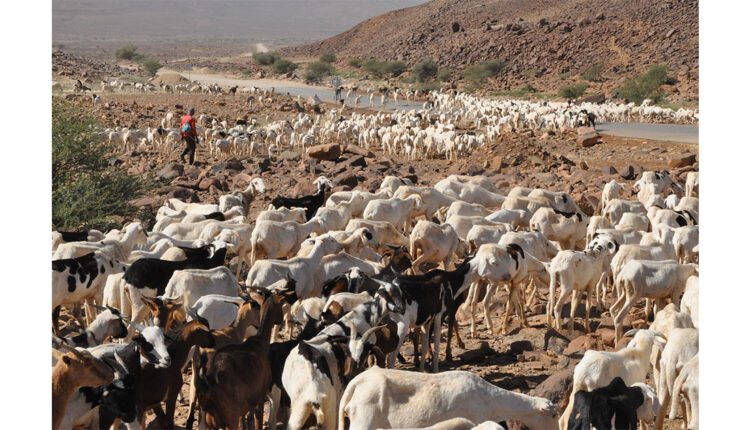
Mauritania possesses a large livestock wealth that is considered one of the main pillars of the national economy, as it contributes significantly to enhancing the gross domestic product. It also plays a pivotal role in absorbing unemployment and creating a significant dynamism in central development and economic progress.
 The total number of this wealth, which is distributed across various inland provinces according to the latest census conducted by the ministry this year, amounts to a total of 39,339,913 heads of different species, including 2,001,277 camels, 6,147,368 cattle, 13,915,459 sheep, and 7,275,809 goats.
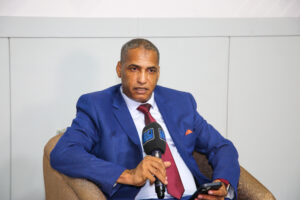
To highlight the reality of this important sector and its role in local development and the measures taken to enhance this role, the Mauritanian News Agency conducted an interview with Dr. Mohamed Ould Bab Ould Kiye, Director of the National Office for Research and Development of Livestock and Pastoral Systems at the Ministry of Livestock Development. He explained that the year 2021 was marked by the historic speech of His Excellency the President of the Republic, Mr. Mohamed Cheikh El Ghazouani, in the city of Tamcheket. In his speech, he emphasized that livestock is the backbone of our national economy, indicating that the speech established a new era of unprecedented attention and care for the livestock sector, which is a vital contributor to local development.
He added that this speech had a positive echo to push the sector towards promising horizons in preparation for its integration into the national and global economy, noting that the attention given to the sector led to the establishment of two national institutions: the Animal Products Company and the National Office for Livestock Research.He pointed out that the President’s speech in Timbedra opened wide the door for national and foreign investors to invest in this important sector, which offers various fields such as dairy and its derivatives, red meat, leather, wool, and more, highlighting that investing in these areas contributes to strengthening local development in various regions of the country, creating job opportunities, and enhancing food sovereignty.
He said that many investors have funded certain projects in the sector, especially in the poultry sector, where this funding has enabled our country to achieve 80% self-sufficiency in eggs and 50% of national needs in poultry, pointing out that these steps have contributed to fighting poverty, absorbing unemployment, and providing food security.
He indicated that the measures taken by the Council of Ministers meeting in the city of Nema to encourage investors, including exempting them from taxes, will help create a favorable investment climate, enhance local development, and develop partnership between the public and private sectors in this area.He mentioned that there are currently nine national companies investing in the dairy sector, which has contributed to a decrease in the amount of imported dairy products, relying on local national production by 40%.
He stated that the government is working to achieve the goal set regarding achieving self-sufficiency in the dairy, poultry, and egg sectors by the year 2027, reviewing some measures that have been taken in this area, which include creating appropriate conditions to enhance investments in the sector, eliminating 80% of diseases that affect animals, and training many livestock breeders on methods for protecting pastures and combating bush fires.
He explained that among the measures taken to enhance the performance of the sector is the recruitment of veterinarians who possess the necessary competence to understand the epidemics affecting animals, along with the provision of a modern laboratory and types of specific veterinary medicines. He pointed out that the ministry has a division for the cultivation of fodder, which is still in its early stages, yet it has achieved some progress.
The director of the National Office for Research and Development of Animal Wealth and Pastoral Systems at the Ministry of Animal Development added that the government has collaborated with some partners to implement a program to train dairy producers in the eastern basin on fodder cultivation, which has positively reflected on increasing the production of high-quality local milk, in addition to introducing some improvements that have also contributed to increasing the amount of milk produced by cows from 50% to 80%.
He said that the Nema Dairy Factory has been restarted and has begun producing pasteurized and long-life milk in cooperation with local herders. An agreement has also been reached with an international partner to establish a modern slaughterhouse in Nouakchott, which will contribute to enhancing the quality of meat, improving its transport mechanisms, and opening the door to its export.He pointed out that there is a promotional program to highlight the importance of feed crop cultivation, which will increase production in both dairy and meat sectors, noting that more than 500 herders have been trained on ways to manage pastures and livestock in a manner that preserves the environment, animal health, and economic returns.
He mentioned the development of a plan for the sector based on a new economic vision that relies on economic returns, supported by clear programs with defined objectives. He pointed out that the ministry has begun to implement a new program that gives special importance to citizens by reducing prices of essential goods, including poultry, eggs, and red meat.
He said that the aim of all these policies is to develop livestock, improve the living conditions of citizens, contribute to achieving self-sufficiency, create job opportunities in this sector, and bring its services closer to the citizens.
He added that these policies included drilling many wells to support livestock breeders and providing veterinary pharmacies throughout the national territory at reduced prices, in implementation of the instructions of the President of the Republic in this regard.