

Minister of Livestock Development: The Sector is working to achieve Self-sufficiency in Fodder
Nouakchott
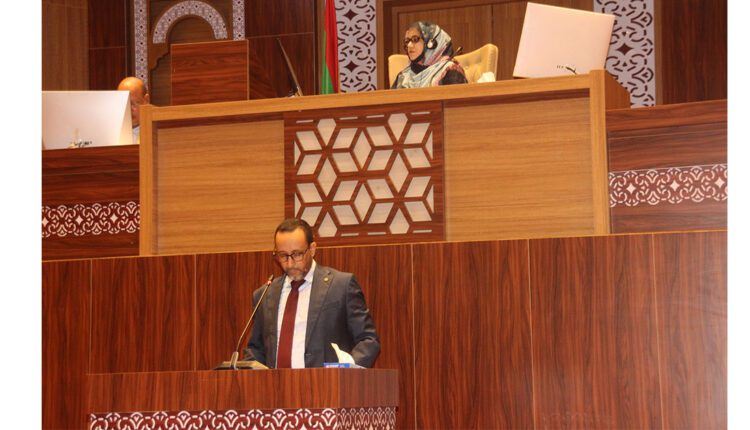
On Thursday morning, the National Assembly held a public session under the chairmanship of Ms. Aglioh Aman Ahzana, Deputy Speaker of the Assembly, to listen to the responses of the Minister of Animal Development, Mr. Mokhtar Ould Gaguih, to an oral question, accompanied by a debate, addressed to him by MP Ahmedou Ould Mbalah.
In his question, the MP highlighted the importance of the animal development sector, especially with regard to livestock and the provision of fodder, in light of the situation on the border with the Republic of Mali, which is an important pastoral outlet for the inhabitants of several states of the country.
He said that the sector’s structural issues have not found the required solutions, stressing the need to find quick and feasible solutions to them.
He questioned the policy of the animal development sector in solving these issues and overcoming them.
Responding to the question, the Minister of Animal Development said that the issue of lack of rainfall in some years is not new, which is why the government designed a special emergency program, the Livestock Support Program (Pak), in which the Ministry of Animal Development expresses the needs, identifies beneficiaries, and is implemented by the Food Security Commission.
He stressed that the government is aware of the need to build resources for animal nutrition, recalling that in the same year 2021, in which the President of the Republic, H.E. Mr. Mohamed Ould Cheikh El Ghazouani, announced from Timbedra a new era in building animal development and formed a special sector for it, the search began for a technical and financial partner for the ambitious “Aoukar” project, which was officially launched two days ago.
The Minister of Animal Development said that the AWKAR project prioritizes the preservation of pastures and the reduction of transhumance, stressing that self-sufficiency in animal nutrition is a sovereign strategic goal, adding that Mauritania has signed agreements with neighboring countries regarding cross-border transhumance when necessary.
He added that Mauritania has signed cross-border agreements with neighboring countries to regulate the movement of herds, noting that Mauritania is a preferred destination for herds from these countries in the fall, as it is for Mauritania in the summer.
He said that the government followed a special emergency plan, which was first represented by a new intervention in the livestock support program, by providing 30,000 tons of feed, at a cost of 4.6 billion old ounces, with a 50% subsidy borne by the state.
He pointed out that since 2020 until today, the total cost of purchasing feed in this program is 29.3 billion old ounces, and the total cost of the subsidy is 15.5 billion old ounces, or about 50%.
He added that the state also intervened in the summer of last year through a special pastoral water program that gave special priority to the border and southern regions, to which the Ministry of Animal Development contributed with the construction of 30 water stations, which had a decisive impact on the proper management of that special circumstance.
He said that the good condition of the rains and pastures this year prevented the need for a special intervention program in the summer.
He also highlighted the policies adopted to solve the structural issues of the sector, which include institutional organization, promoting animal health, developing pastoral and fodder materials, livestock divisions, and improving production through breeds, stressing that the government is working on these axes to value capacities, modernize the sector and link it to the economic cycle.
He stressed that the government is well aware of the necessity of building self-resources for animal nutrition, including solving issues related to breeding, ensuring its sustainability, and adapting it to climatic, geopolitical and economic conditions, noting that the breeding system in Mauritania is mainly based on large-scale breeding, and will remain so for years to come.
The Minister of Animal Development said that the programs of His Excellency the President of the Republic “My Ambition for the Nation” have allocated one third of its basic commitments in the field of animal nutrition and pastoral water, as detailed in the general policy of the government, presented by His Excellency the Prime Minister, Mr. Mokhtar Ould Djay, in September 2024, within the strategic axes of action in this field, as well as its actual implementation by the animal development sector in 2025.
He highlighted that the sector is currently working on several practical levers to develop fodder and pastoral resources, and build cumulatively to reach self-sufficiency in animal nutrition.
These levers include the introduction of pasture improvement techniques, valorization of natural fodder, preservation of pastures from fires, cooperation with professional organizations to spread the culture of reliance on fodder conservation and self-production, as well as the establishment of integrated development poles, he said.