

Ministry of Justice organizes Sensitization Workshop on the Criminalization of Slavery, Human Trafficking, Migrant Smuggling and Child Labor
Nouakchott
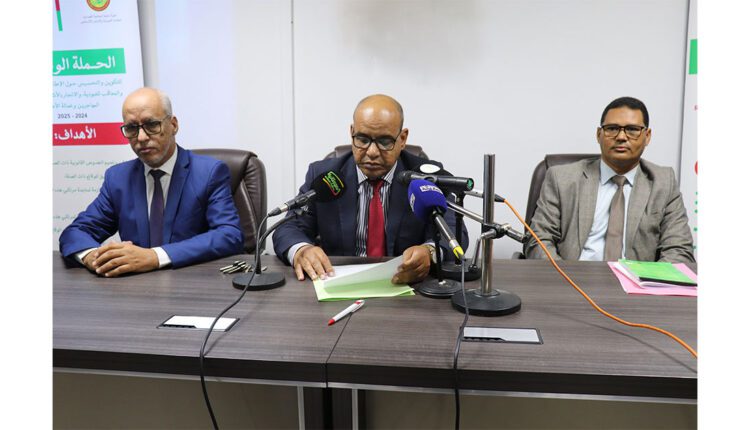
The follow-up cell for the judicial processing of slavery and trafficking in persons cases at the Ministry of Justice organized a sensitization workshop on Thursday at the National School of Administration, Journalism and Magistracy in Nouakchott West on the legal framework criminalizing slavery, human trafficking, migrant smuggling and child labor.
In his speech on the occasion, Counselor in charge of cooperation at the Ministry of Justice and coordinator of the campaign, Mr. Omar Ould El Kassem, stressed that Mauritania is one of the first countries to combat these crimes, noting that it has acceded to several international conventions, including the United Nations Convention against Crime of 2000 and its supplementary protocols, such as the Protocol against the Smuggling of Migrants and the Protocol to Prevent, Suppress and Punish Trafficking in Persons, in addition to the Trafficking in Persons Protocol.
He explained that the government has established specialized administrative bodies to address these phenomena, including the National Authority to Combat Trafficking in Persons and Migrant Smuggling, in a clear expression of its commitment to continue efforts to address these crimes, in line with the directives of the President of the Republic, Mr. Mohamed Ould Cheikh El Ghazwani, and the government’s policy of promoting and protecting human rights.
He pointed out that these crimes have become a complex security challenge that requires concerted efforts from all parties to protect society and effectively address them.
For his part, Mr. Sidi Gnahallah, Advisor to the Director General in charge of Administrative Affairs, stressed the importance of the workshop and the topics presented, calling on the students of the National School of Administration, Journalism and the Judiciary to participate seriously in its work.
The opening of the workshop was attended by the Assistant Inspector of the Judiciary, a number of Ministry of Justice officials, as well as a group of students from the National School of Administration, Journalism and the Judiciary.