

Opening of Workshop on Tobacco Control in Mauritania
Nouakchott
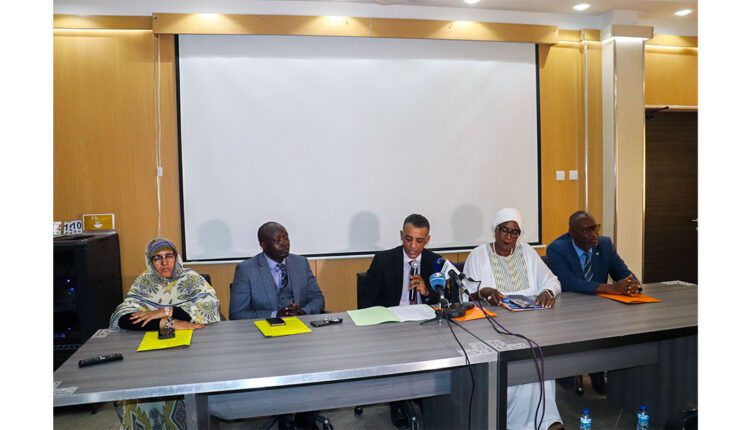
A technical workshop dedicated to strengthening capacities on implementation and compliance of tobacco control in Mauritania opened on Tuesday in Nouakchott.
The three-day workshop aims to shed light on smoking, its danger and its negative effects on people’s health, in addition to strengthening the country’s capacities in the field of tobacco control.
In a speech on the occasion, the Director General of Public Health, Mr. Mohamed Mahmoud Ould Ely Mahmoud, explained that tobacco is one of the main health challenges, leading to the death of more than 8 million people annually globally.
He said that the 2019 Demographic and Health Survey statistics in the country showed that the rate of tobacco use among men reached 16.2% and among women 2.1%, indicating that these figures call for firm measures to face this health challenge.
He added that Mauritania approved Law No. 020-2018 on June 6, which aims to regulate the production, importation, distribution, marketing and consumption of tobacco and its derivatives, noting that the implementation of this law requires the active participation of all concerned sectors to play their role to ensure its successful implementation.
He thanked all partners, especially the World Health Organization (WHO) for its continuous support to the health sector and its efforts in promoting public health and tobacco control.
For her part, the WHO representative in Mauritania, Ms. Charlotte Afati Njay, explained that the objective of this workshop is to enhance the understanding of tobacco control policies and laws at the national, regional and global levels, in addition to strengthening capacities in the field of tobacco control law enforcement, especially with regard to emerging products, and enhancing cooperation in the field of tobacco control between different government sectors in charge of law enforcement.
The workshop was inaugurated by officials from the health sector, a representative of the World Health Organization’s mission to the Ouagadougou Alliance, and representatives of relevant government sectors.