

World Day Against Trafficking in Persons Commemoration
Nouakchott
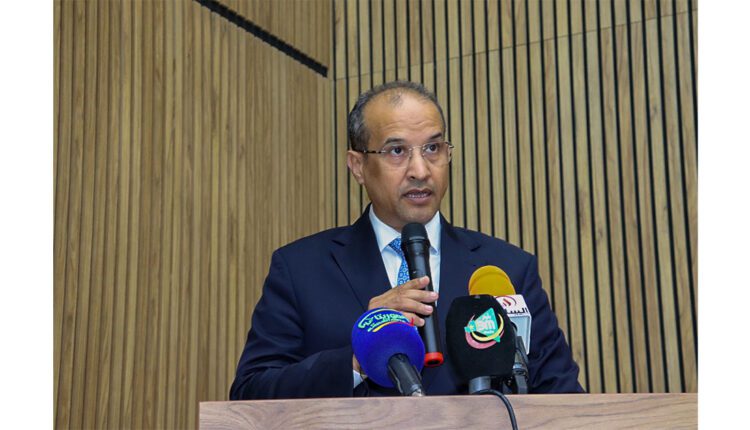
On Tuesday July 30, the National Authority for the Fight against Trafficking in Persons and Smuggling of Migrants (NATSOM) commemorated in Nouakchott the World Day against Trafficking in Persons under the theme ‘Let’s leave no child by the roadside in the fight against trafficking in persons’.
In a speech on the occasion, the Commissioner for Human Rights, Humanitarian Action and Relations with Civil Society, Cheikh Ahmedou Ould Ahmed Salem Ould Sidi, explained that over the past five years, the government has made tangible achievements to help understand the phenomenon of human trafficking and expand the fight against it by establishing a toll-free number to report suspected cases and organising several campaigns, in partnership with civil society, to raise awareness against human trafficking and slavery, he pointed out that a national mechanism has been established to diagnose and care for victims of human trafficking and migrant smuggling, in accordance with Mauritania’s international obligations, in addition to establishing a fund to support victims of slavery, launching the process of establishing a national programme against child trafficking, organising a training workshop on slavery for imams, and training components on trafficking in persons for judges.
The government has approved a bill to establish a special court to combat slavery, human trafficking and migrant smuggling, and launched a national campaign to sensitise law enforcement authorities on the judicial handling of cases of human trafficking and slavery practices, in an effort to identify obstacles to enforcing laws criminalising slavery, punishing trafficking, and protecting victims, he said.
For his part, Mr Mohamedou Ould Sidi, President of the Forum of Non-Governmental Actors, stressed that the practice of human trafficking is one of the most severe forms of injustice to which human beings can be subjected, a waste of their dignity and a fundamental denial of their right to freedom and equality, noting that the Universal Declaration of Human Rights states that all are born free and equal in dignity and rights, and should treat each other with a spirit of brotherhood.
He thanked the government for its tremendous efforts in this regard and called on it to redouble its efforts to provide these basic needs to ensure a decent life for all citizens, especially the vulnerable and fragile groups.
For his part, the Assistant Representative of the United Nations High Commission, Mr Djibo Amadou, reiterated the most important objectives of the Commission in saving the law and social service related to the referral of victims of human trafficking and individuals at risk, especially those related to the rights of children, stressing the need to identify the Commission, its manifestations and objectives.
The ceremony was held in the presence of the Secretary General of the Ministry of Justice, the director of the National Authority to Combat Trafficking in Persons and Smuggling of Migrants, and a number of civil society representatives.