

Launch of the Third Action Plan for Accelerated Growth and Shared Prosperity (2026–2030)
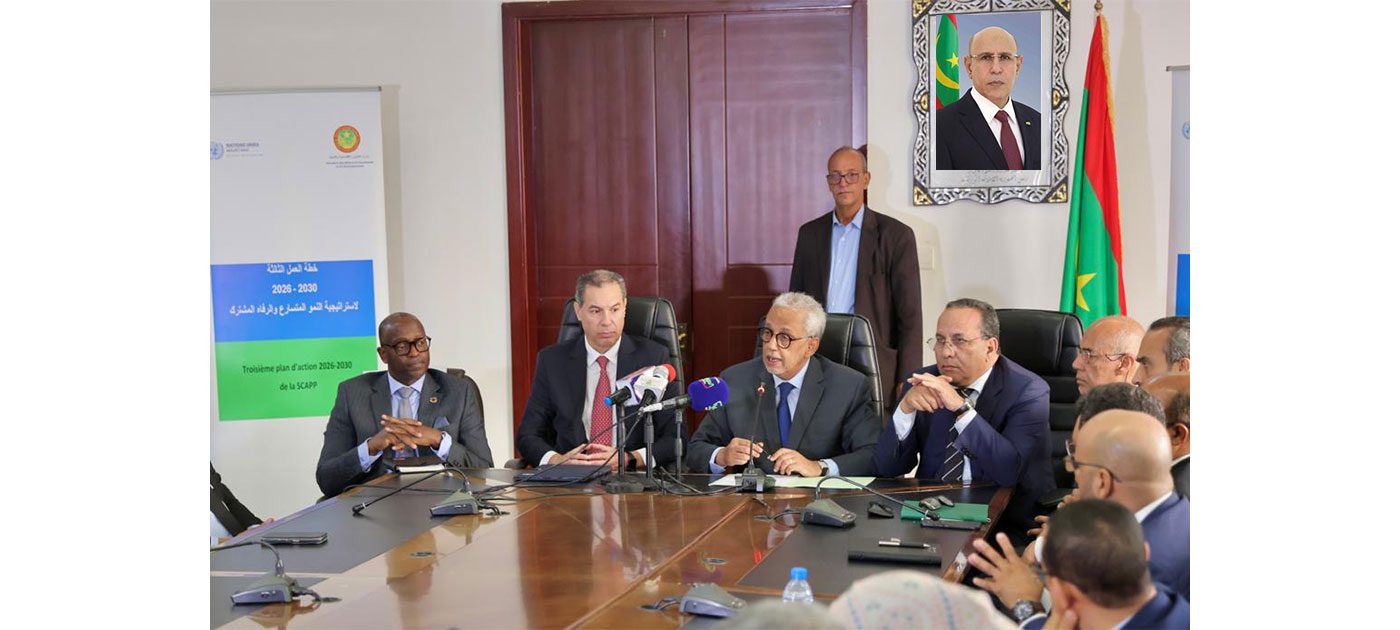
The Ministry of Economic Affairs and Development launched, today, Thursday, in Nouakchott, the process of preparing the third action plan for the National Strategy for Accelerated Growth and Shared Prosperity for the period 2026–2030.
This plan focuses on accelerating the structural transformation of the economy, creating sustainable jobs, and strengthening resilience in the face of crises, while improving monitoring and evaluation mechanisms, with an emphasis on achieving tangible results.
His Excellency the Minister of Economic Affairs and Development, Mr. Abdallah Suleiman Sheikh Sidiya, in his opening remarks, that this plan comes amid a difficult international context marked by multiple crises, noting that the country has managed, thanks to the guidance of His Excellency the President of the Republic, Mr. Mohamed Ould Cheikh El Ghazouani, to build a considerable reserve of resilience and foresight to face these challenges.
He highlighted the pivotal role of national expertise in ensuring the success of this initiative, emphasizing that the plan’s success depends on collective action and coordination among the various stakeholders.
For his part, the United Nations Resident Coordinator, Mr. Antonio Aranipar, commended the Mauritanian government’s political will to make this plan more selective and rigorous, with a decisive focus on results rather than merely on activities.
He also pledged to provide technical expertise and leverage the United Nations’ comparative advantages and mobilization capacity at various stages of the plan’s preparation—from diagnosis, through formulation and costing, to the establishment of an effective coordination and monitoring mechanism—enabling the measurement of the real impact on citizens’ lives.
For his part, Mr. Mansour N’Gai, Resident Representative of the United Nations Development Programme, that this plan represents a decisive phase in accelerating a qualitative leap in Mauritania’s development trajectory, calling for moving beyond isolated sectoral approaches and focusing on an integrated package of priority, high-impact interventions capable of creating jobs and transforming promising sectors.
He emphasized the pivotal role of the private sector in this dynamic, through the creation of an enabling environment for the development of bankable infrastructure projects, while stressing the need to implement the plan on the ground in regions and municipalities to meet the needs of the population.