

Minister of Economy: ‘Mauritania Will Not Be a Country of Reception or Resettlement of Foreign Migrants in an Irregular Situation’
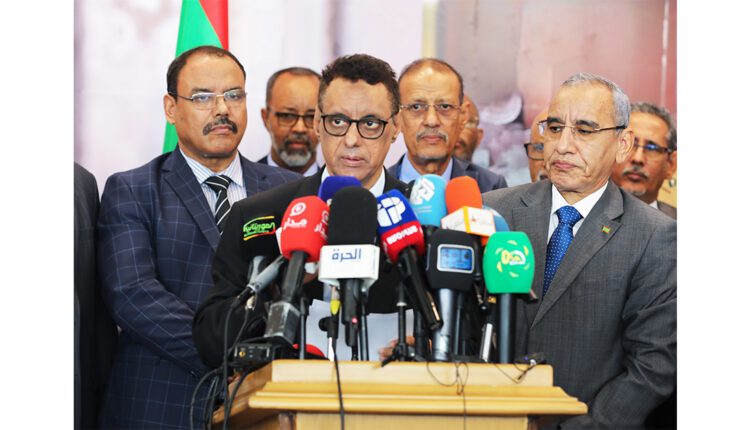
Following the signing ceremony of the joint declaration establishing a partnership on migration between Mauritania and the European Union, the different parties held a news briefing on 7 March.
Mr. Abdessalam Mohamed Saleh, the Minister of Economy and Sustainable Development, provided some clarifications, particularly the non-legally binding dimension of the document. The Minister highlighted Mauritania’s leadership and the European Union’s interest in it as a strategic, effective, and credible partner. He recalled that it is Mauritania that is at the initiative, having noted inadequacies in the framework governing cooperation relations between the two parties.
For the Minister of Economy, the document takes into account common interests while respecting sovereignty. He added that Mauritanian citizens are at the forefront of the beneficiaries of this signature because it will have a significant impact on their daily lives, given the different socio-economic aspects that it includes.
Before finishing his remarks, Mr. Mohamed Saleh declared that the country would not be a land of reception or resettlement of foreign migrants in an irregular situation. He maintained that this agreement is not the result of a deal or any other form of under-the-table agreement. To remove any ambiguity, the Minister indicated that the full text of the declaration was read and distributed to the press.
In turn, Ms. Yvla Johansson, the European Commissioner for Homel Affairs, Mr. Fernando Grende-Marlaska, the Spanish Minister of Interior, and the Belgian Secretary of State for Asylum and Migration Assistance, welcomed the level of discussions and the warm welcome on Mauritanian soil. The latter indicated that Mauritania and the EU are determined to strengthen their partnership through constructive dialogue and concrete actions.
All stakeholders affirmed that the various axes of the document will be implemented with strict respect for human rights. They expect to address the root of the problem, eradicating the root causes of irregular migration and its dangers.