

Minister of Education Takes Part in Several Meetings in Washington
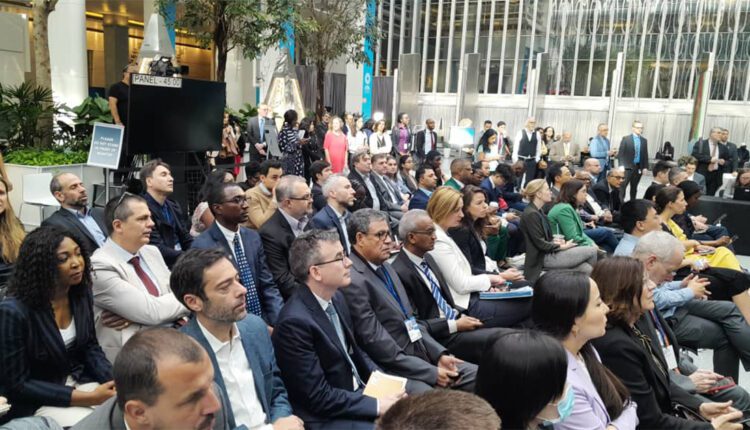
On 12 April, in Washington, the Minister of National Education and Reform of Education System participated, on the sidelines of the spring meeting of the World Bank and the International Monetary Fund in several meetings giving rise to an exchange of experiences with other regions likely to benefit our educational system.
Thus, on the first day, he took part in a meeting to share experiences from certain regions on the following themes: “Promising alternative system for the delivery of education services” and “Examples of policies and relevant interventions from other countries (Bangladesh, Indonesia, Mongolia).
Welcoming the holding of these meetings, the Minister stressed the importance of capitalizing on the efforts made by the countries to meet the challenges of children’s access to school, especially girls. It was an opportunity for him to present the work done by our country to improve school coverage but also the use of new technologies to boost the results of national exams.
In terms of examples of policies and interventions, the Minister reviewed several points where experience sharing is possible.
In addition, Mr. Brahim Vall Ould Mohamed Lamine participated in a high-level panel of Ministers from West and Central Africa on putting words into action on gender equality.
At the end of this panel marked by the advocacy and commitment of the countries and personalities present in favor of the education of girls and gender equality, the interventions were all unanimous in formulating the wish to see the participation of women in the development of the continent supported and improved.
Finally, the Minister took part, on the second day, in a high-level panel on how to govern in times of crisis. The panelists proposed to reflect together on the interactions and modifications made in times of crisis. The place of law in the crisis was also discussed, and the effects of the measures adopted to deal with the crises.
The panelists’ discussions also focused on the consequences of the crisis on institutions, society, education, economic development, and public finances, among others.