

Mauritania Marks New Milestone in Its International Human Rights Engagement
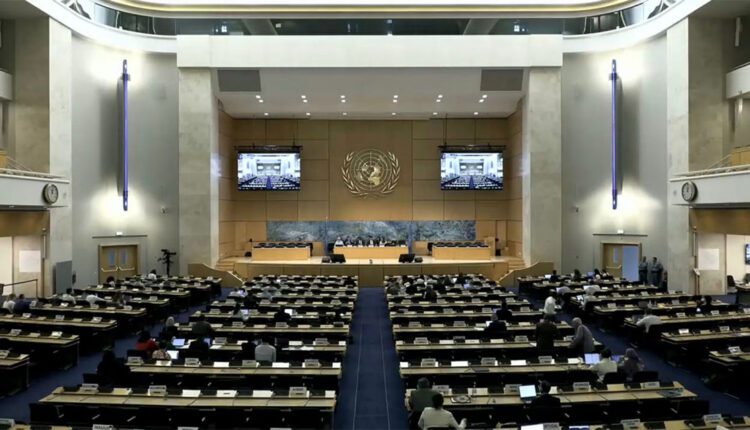
On June 30 in Geneva, the United Nations Human Rights Council adopted the final report of the Islamic Republic of Mauritania as part of the fourth cycle of the Universal Periodic Review (UPR) during the Council’s 62nd session.
The meeting was attended by an official delegation led by Mr. Sid’Ahmed Ould Bennane, Commissioner for Human Rights, Humanitarian Action, and Relations with Civil Society.
On this occasion, the Commissioner reaffirmed Mauritania’s commitment to continuing its constructive cooperation with the Human Rights Council and its mechanisms. He emphasized that the UPR is an essential framework for promoting human rights through dialogue, the exchange of experiences, and the sharing of best practices. He also expressed Mauritania’s appreciation to the states that participated in the interactive dialogue, as well as to the Working Group, the members of the Troika, United Nations agencies, and technical and financial partners for their support throughout the process.
Mr. Sid’Ahmed Ould Bennane stated that the Mauritanian government had adopted a participatory approach to reviewing the recommendations, involving various government ministries, independent national institutions, and civil society organizations. This process resulted in the acceptance of 229 out of 271 recommendations, representing 84.5% of the total. According to him, this reflects the country’s political commitment to further strengthening its national human rights protection system and consolidating the rule of law.
He explained that the accepted recommendations focus on strengthening the legal and institutional framework, protecting the rights of women, children, and persons with disabilities, combating slavery and its lasting effects, human trafficking, and discrimination, as well as promoting economic and social rights. They also address improvements in education, healthcare, and social protection services, enhanced political participation, greater social cohesion, and responses to the impacts of climate change. He added that most of these recommendations are already aligned with ongoing national reform efforts.
The Commissioner also announced that the government, in cooperation with the Office of the United Nations High Commissioner for Human Rights in Mauritania, has launched a series of workshops to disseminate the recommendations and develop a draft national action plan for their implementation. This plan will be submitted to the country’s highest decision-making authorities for adoption, with the objective of translating international commitments into concrete measures supported by monitoring and evaluation mechanisms.
He further reviewed the main human rights reforms undertaken by Mauritania, including the development of the legislative framework, the strengthening of relevant national institutions, the implementation of the National Strategy for the Promotion and Protection of Human Rights, continued efforts to combat human trafficking and slavery-like practices, the promotion of the rights of women, children, and persons with disabilities, and the implementation of programs in education, healthcare, social protection, and economic development.
In conclusion, the Commissioner stressed that the adoption of this report marks the beginning of a new phase focused on implementation, monitoring, and evaluation. He reaffirmed Mauritania’s commitment to continuing its cooperation with the Human Rights Council and its international partners in order to strengthen the protection of human rights and promote the values of justice, equality, and human dignity.