

Conclusion of the 55th session of the Executive Committee of the Union of Councils of Member States of the Organisation of Islamic Cooperation
Nouakchott
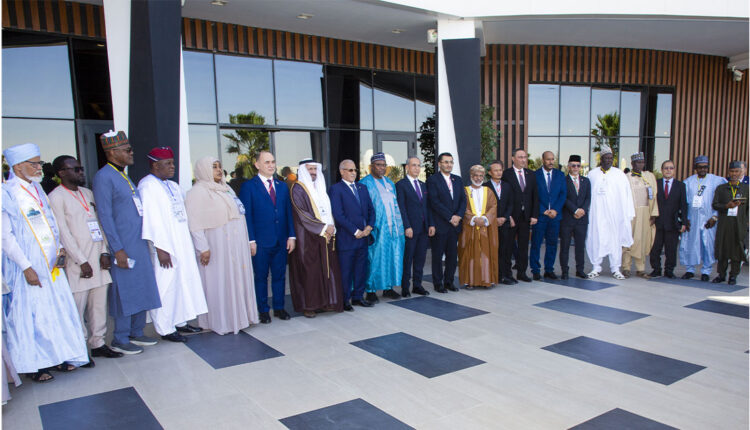
The 55th session of the Executive Committee of the Union of Councils of Member States of the Organisation of Islamic Cooperation concluded yesterday evening in the capital Nouakchott.
The session culminated in the issuance of the ‘Nouakchott Declaration,’ which affirmed the unity of the Islamic nation and the need to uphold the values of solidarity and justice as the best way to face current regional and international challenges.
The declaration placed the Palestinian cause at the top of its priorities, condemning the continued Israeli aggression against Gaza, the West Bank and Jerusalem as a flagrant violation of international law, and calling on the international community to shoulder its responsibilities and exert pressure to stop settlement and displacement, and enable the Palestinian people to establish their independent state with Al-Quds Al-Sharif as its capital.
The participants praised South Africa’s initiative before the International Court of Justice regarding the crimes of genocide in Gaza. They also welcomed the recognition of the Palestinian state by the majority of the world’s countries, including four of the five permanent members of the Security Council, which was considered a political gain that strengthens the legitimacy of the Palestinian cause on the international stage.
In line with these positions, the Nouakchott Declaration affirmed its rejection of any external aggression targeting Islamic countries, stressing the need to respect international law and warning against the dangers of double standards that threaten world peace and undermine peoples’ confidence in the international system.
From this perspective, the participants called for the launch of a parliamentary initiative to establish a ‘new alliance’ that would contribute to the reformulation of a more just and equitable world order and strengthen the role of the Islamic nation in international decision-making.
The declaration also stressed the importance of combating extremism and radicalism through educational and development policies, caring for Muslim minorities, countering Islamophobia, and paying attention to women’s rights, the environment and human rights in accordance with an authentic Islamic vision.
At the conclusion of the meetings, the participants praised Nouakchott for hosting this session, considering that its success reflects the security and stability enjoyed by Mauritania and its continuous efforts to support just causes, foremost among which is the Palestinian cause.
The Nouakchott Declaration thus cemented its status as a reference document for joint Islamic parliamentary action, affirming that the Ummah possesses the strengths that enable it to regain the initiative and contribute to building a more balanced and just world order.