

Mauritanian Diplomacy … a Constant Commitment to Principles
Nouakchott
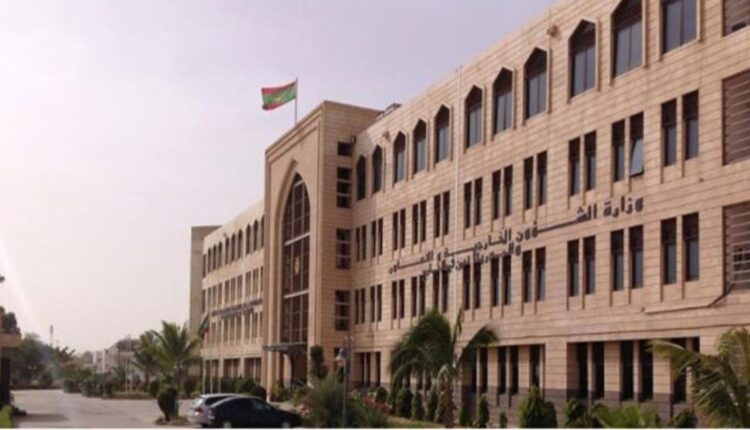
In recent days, some foreign media circulated claims alleging that Mauritania serves as a transit point for weapons coming from Ukraine en route to armed groups active in the Sahel region. However, these claims have not been supported by any tangible evidence; nonetheless, their repetition necessitates a clear clarification.
The Islamic Republic of Mauritania firmly rejects these claims. For over a decade, our country has pursued a solid strategy for the prevention and combat of violent extremism, which has enabled it to avoid the security slip-ups experienced in the region, making it a model to be emulated, based on a deep conviction that Mauritania’s internal security is inseparable from the security of its regional environment.
This concept is rooted in the duty of solidarity and the logic of political realism. With a clear vision, the Islamic Republic of Mauritania understands that destabilizing any neighbor will inevitably have negative repercussions on itself, and experiences have proven that the insecurity of one state quickly spills over its borders to affect its neighbors. Based on this, Mauritania’s commitment to the concept of collective security in the Sahel has been solidified, as it has consistently supported its brothers during times of vulnerability and unrest through logistical support, the exchange of sensitive information, and quiet mediation.
In addition to this regional dimension, Mauritanian diplomacy has continued to operate with a consistent approach characterized by continuity. In a world where transformations and alignments are frequent, our country has maintained solid principles: commitment to multilateralism, strict adherence to the United Nations Charter, prioritizing peaceful solutions to conflicts, and rejecting involvement in axis conflicts and geopolitical tensions.
The stance on the Russian-Ukrainian conflict embodies this consistent approach. In the United Nations General Assembly, Mauritania voted in favor of the resolution condemning violations of Ukraine’s sovereignty and territorial integrity, while at the same time opposing the suspension of Russia’s membership in the Human Rights Council, believing that sanctions and isolation policies do not resolve crises but prolong them. Some viewed this position as hypocrisy, while others considered it a commitment to principles. However, Mauritania sees it as clarity in thought: relations with Moscow date back to 1965, while relations with Kyiv are recent and limited. Therefore, its choices are not dictated by considerations of aid or pressure, but by the depth of historical ties and the consistency of principled positions.
Together with its partners in the Sahel, this approach has been maintained. There has been an open dialogue with the Malian authorities, who demonstrated an understanding of the Mauritanian position, based on a strong conviction that preserving the stability of any country in the region fundamentally protects the entire Sahel area from the repercussions of cascading collapse.
Accordingly, Mauritania, in light of these recent allegations, does not only firmly reject them but also reaffirms its commitment to its steadfast approach: a few words, many actions, and a constant fidelity to principles. In a region beset by crises and coups, our country has chosen a unique path: a diplomacy based on restraint in style and firmness in principle, stemming from a deep belief that stability is a shared collective responsibility, not the concern of a single state.